Drone Forensics Operations
Shielded storage, transport, and analysis workflows for unmanned systems. Protect payload data, prevent RF tracking, and preserve evidence integrity from field recovery through lab analysis.
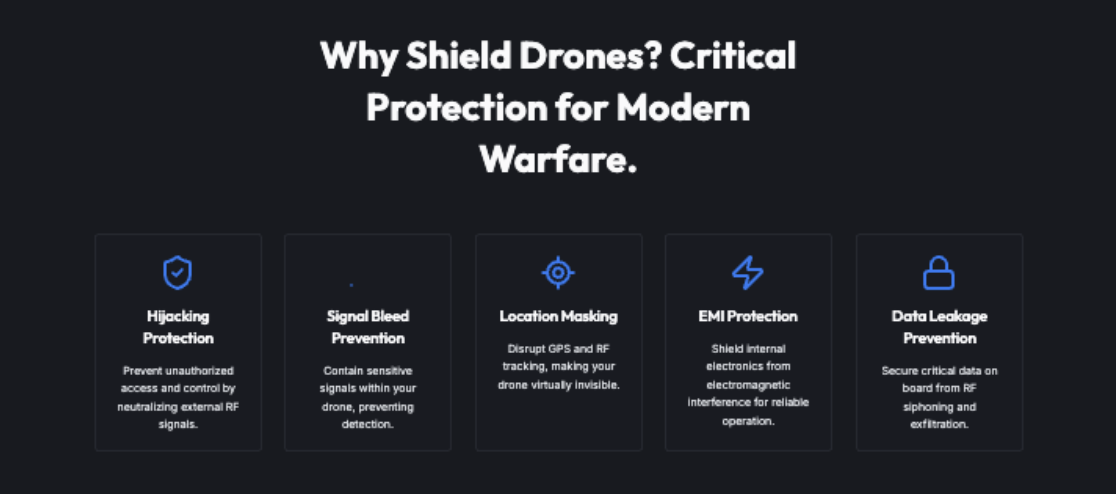
Why shield drones?
Critical protection for modern warfare and forensic recovery operations.
Hijacking protection
Prevent unauthorized access and neutralize external RF control attempts.
Signal bleed prevention
Contain sensitive signals to reduce detection and tracking risks.
Location masking
Disrupt GPS and RF tracking to keep the asset virtually invisible.
EMI protection
Shield internal electronics from interference for reliable operation.
Data leakage prevention
Secure critical data from RF siphoning and exfiltration.
Operational workflow
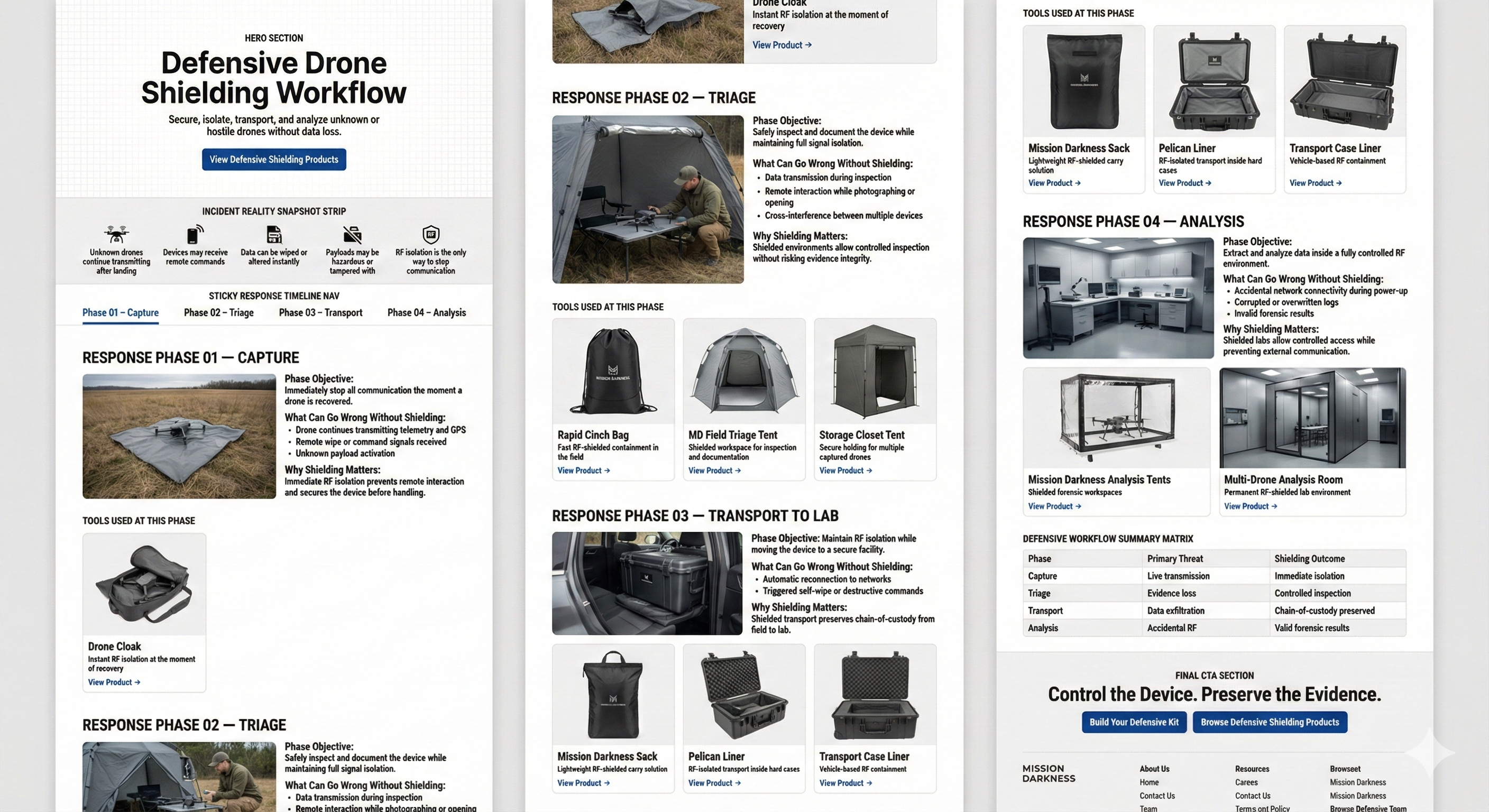
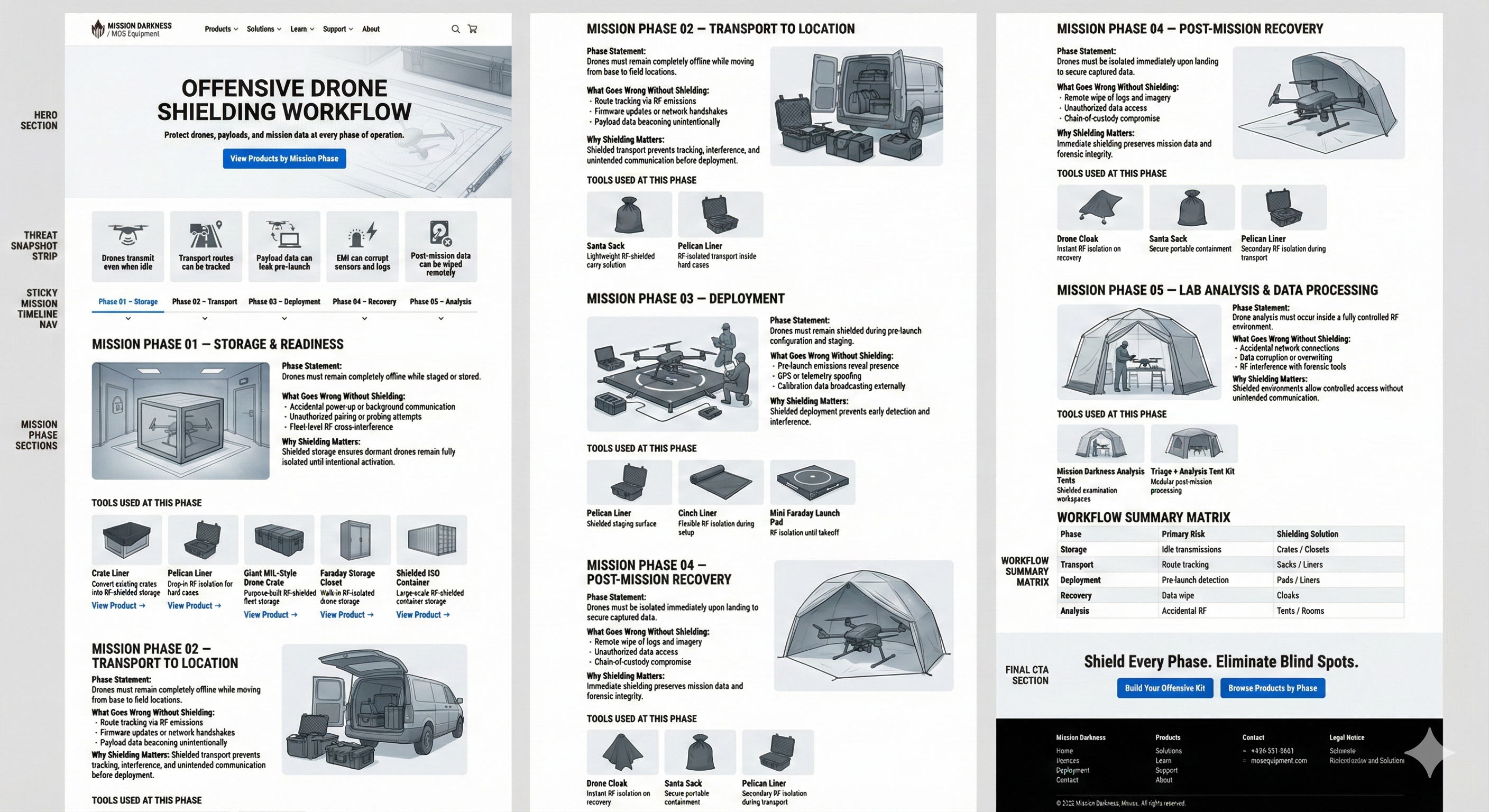
Shielding is most effective when integrated across mission phases. MOS workflows map protection from storage and transport through recovery, triage, and lab analysis.
Storage + readiness
Keep drones isolated while staged to prevent unintended transmissions.
Transport + recovery
Shielded cases protect against tracking, spoofing, or data exposure.
Lab analysis
Use shielded tents or pods to isolate devices during data extraction.
Workflow references
Visual guides for offensive and defensive drone shielding workflows.
Recommended shielding stack
Pair transport cases with lab-grade isolation to secure drones end-to-end.
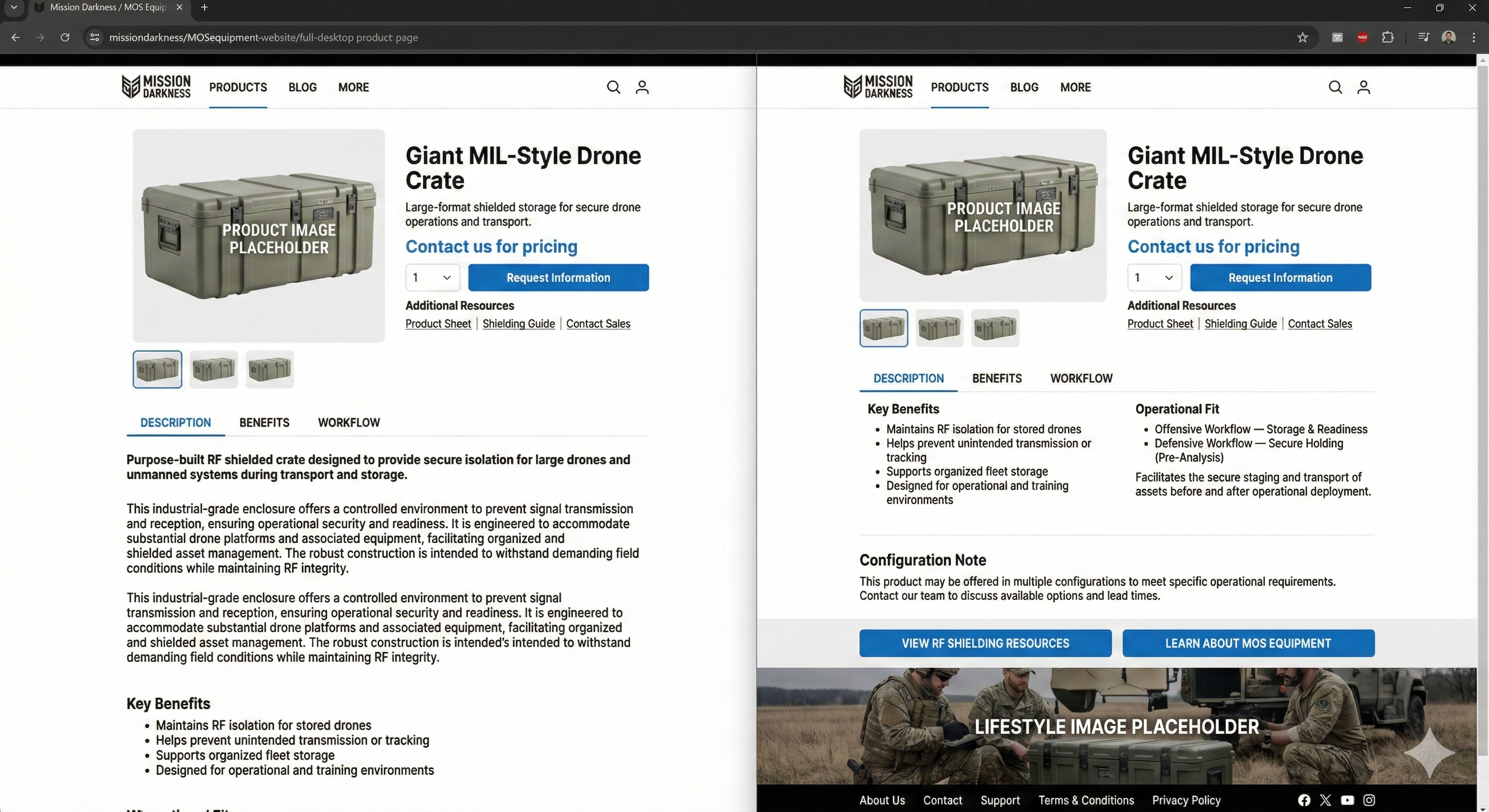
Shielded transport + storage
Large-format protected storage for secure transport and staging.
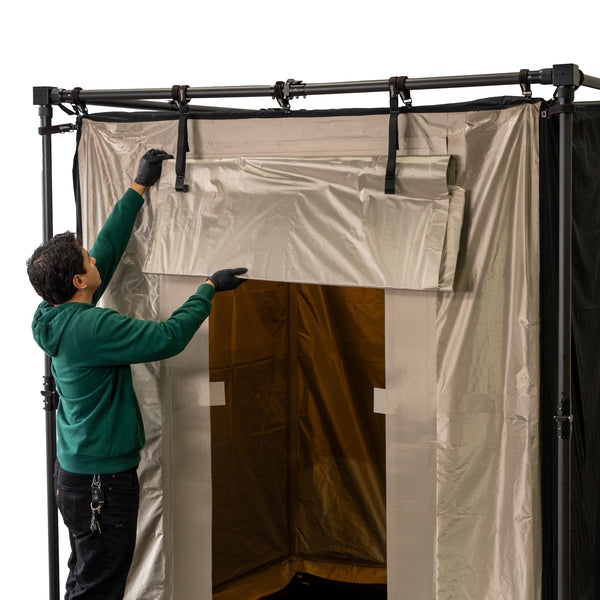
CYPHERCYLENT Faraday Tent
Shielded workspace for triage, diagnostics, and forensic analysis.
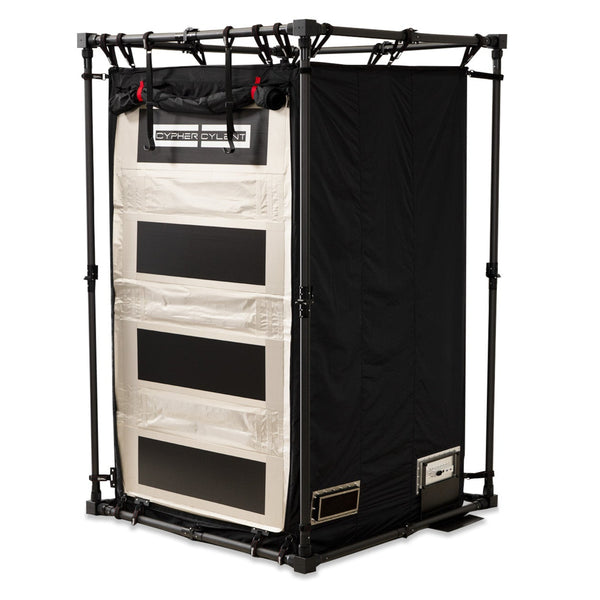
CYPHERCYLENT Faraday Pod
Compact lab enclosure for controlled analysis when space is limited.